

We Thought Our API Gateway Would Protect Us. It Became Our Biggest Single Point of Failure
How We Turned Our API Gateway from a Single Point of Failure into a Reliable Layer

Hello, my name is Ahmed Eid (eidoox), a Senior Backend Engineer with over 3 years of experience building reliable, scalable, distributed, and real-time systems.
In this Production Insight, I want to share the lessons learned from designing and operating API Gateways in production environments, and how a component created to improve security, routing, and control can unexpectedly become the biggest single point of failure in an entire platform.
This is not another guide on how to configure routes, add authentication middleware, or implement rate limiting. It is about the operational challenges behind production-grade API Gateways: designing for high availability, understanding dependency failures, making deliberate fail-open versus fail-closed decisions, and building the observability required to understand failures before they become outages.
A production API Gateway is not measured by how well it handles traffic when everything is healthy. It is measured by how predictably it behaves when dependencies fail, traffic spikes, and production starts breaking.
You can learn more about my background through my Personal Website.
Introduction
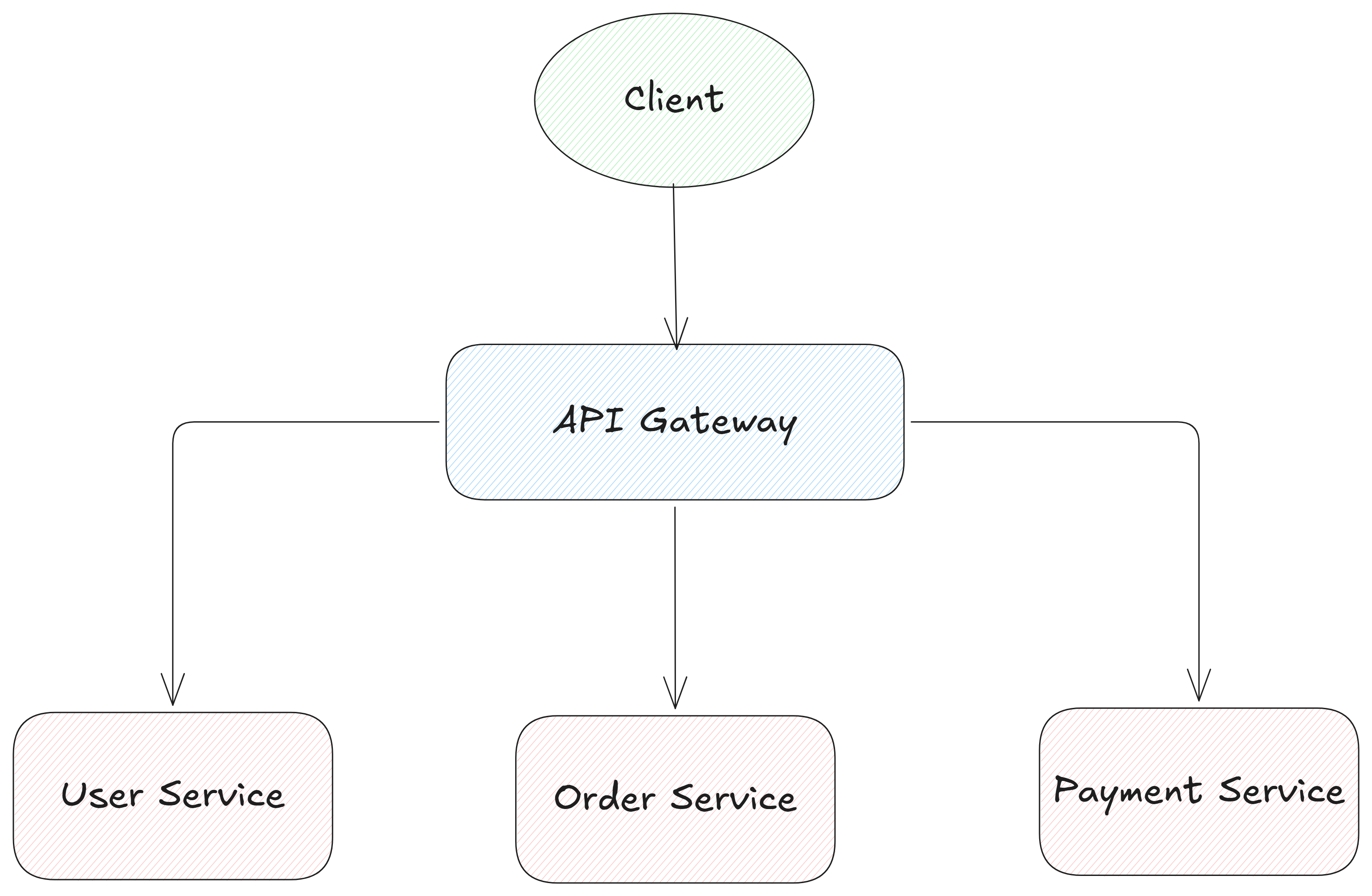
Most teams look at this architecture and think: We have centralized authentication, and routing.
But they miss the most important fact:
Every request in the entire platform now depends on a single component.
So, the API gateway is no longer a convenience layer. It is part of your system's availability.
Your API Gateway Is Part of Your System’s Reliability Boundary, Not Just a Routing Layer
A production gateway does far more than route HTTP requests.
It usually does:
Authentication and Authorization
Rate limiting
Traffic policies
Request validation
TLS termination
Observability
Service discovery
When a component controls every incoming request, its failure impact is equal to the entire platform.
Design it like a most important service in your system:
High availability
Disaster recovery
Continuous monitoring
A Single Gateway Instance Is a Failure Waiting to Happen
Bad Design
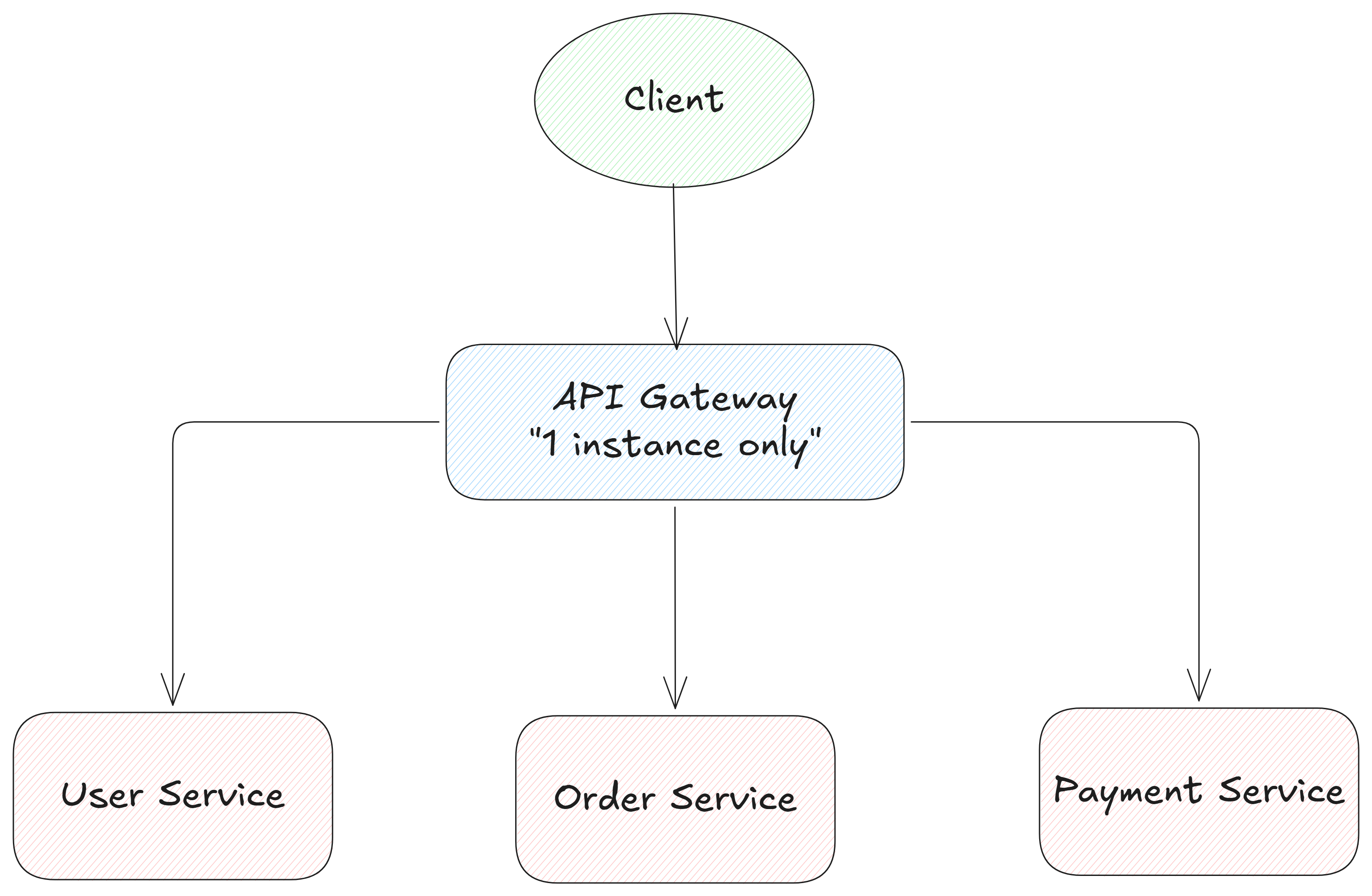
Your databases can be healthy, your caches can be healthy, your services can be healthy, but users still see downtime.
Production Design
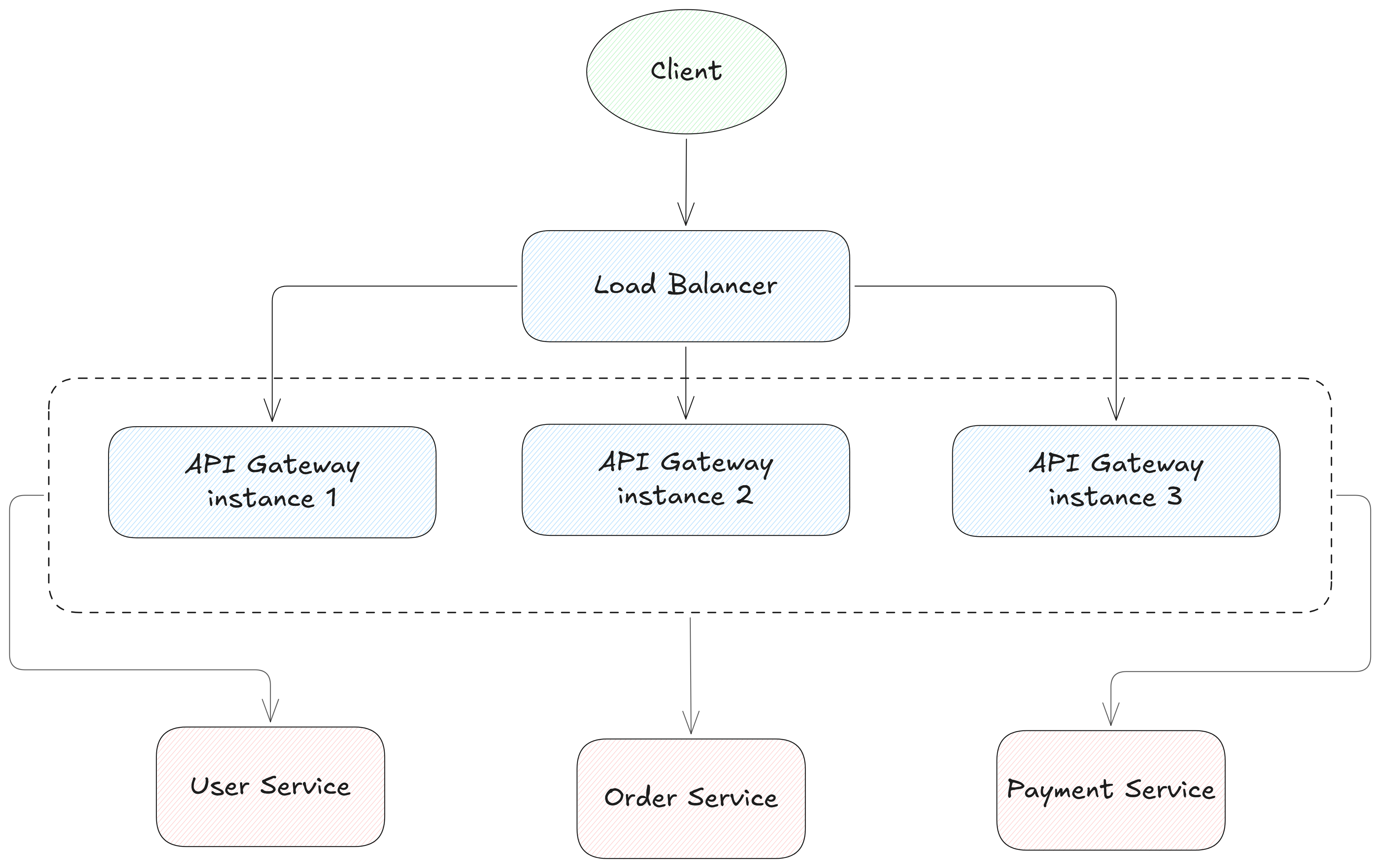
A production gateway should have:
Multiple replicas
Health checks
Auto-recovery
Horizontal scaling
Every Gateway Dependency Creates a New Failure Path
An API Gateway does not only forward requests. To protect the system, we add capabilities such as authentication, rate limiting, request validation, and traffic control.
However, every new capability can introduce a new dependency and therefore a new way for the entire platform to fail.
Consider distributed rate limiting:
Client >>> API Gateway >>> Redis (Rate Limit State) if allowed >>> Microservices if not >>> returns 429
For every incoming request, the gateway first checks Redis to determine whether the client has exceeded its allowed request limit.
Everything works perfectly while Redis is healthy. But now ask a production question:
What happens when Redis becomes unavailable?
Your microservices may still be healthy.
Your databases may still be healthy.
Your caches may still be healthy.
Yet the request cannot pass through the gateway because one of its protection mechanisms has become unavailable.
To sum up: The most dangerous failures are not always behind your API Gateway. Sometimes they exist inside the gateway itself.
How do we design the gateway to handle dependency failures ?
A gateway is not just responsible for forwarding traffic. It is responsible for deciding what happens when the systems it depends on are no longer reliable.
This means every dependency introduces a decision point in the request flow. Not just a technical integration.
In production systems, this is handled through a small set of concrete mechanisms applied consistently across all gateway dependencies.
Strict Timeouts on Every Dependency Call
Every external call from the gateway must have a hard timeout. For example, when the gateway checks Redis for rate limiting:
If Redis does not respond within 50ms, the gateway does not wait.
It immediately treats the dependency as failed.
This prevents a slow Redis instance from blocking all incoming traffic and exhausting gateway resources (threads, connections, event loop).
Circuit Breaker for Repeated Failures
If a dependency starts failing consistently, the gateway stops calling it temporarily.
Example: Redis fails 30% of requests in last 20 seconds: Circuit opens and Gateway stops calling Redis for 30 seconds
So system becomes: client >>>> gateway >>>> skip redis temporarily.
This prevents cascading latency and protects gateway throughput.
Explicit Failure Mode per Dependency
One of the most important production lessons is that not all dependencies deserve the same failure behavior.
In a real API Gateway, each dependency has a different role in the request lifecycle. Because of that, the system must explicitly define what happens when each dependency fails.
Some failures should stop the request completely. Others should degrade the response. And some should not block the request at all.
For example, if the authentication layer is unavailable in a system where every request must be verified, continuing without it may be unacceptable. In this case, failure should block traffic.
On the other hand, if a dependency like a rate-limiting store or metadata service becomes unavailable, stopping all traffic might not be the correct decision. In some systems, it is more acceptable to continue serving requests in a degraded mode rather than blocking the entire platform.
The key idea is that dependency failure is not a binary problem. It is a design decision.
Each dependency must have a clearly defined failure behavior:
Should the request be blocked?
Should the system continue with degraded behavior?
Or should the system bypass the dependency entirely?
Without these explicit decisions, a single failing dependency can unintentionally take down the entire gateway, even when the core services are healthy.
The goal is to ensuring no single dependency failure can consume all gateway capacity or stop all traffic flow.
What a Production-Grade API Gateway Actually Looks Like
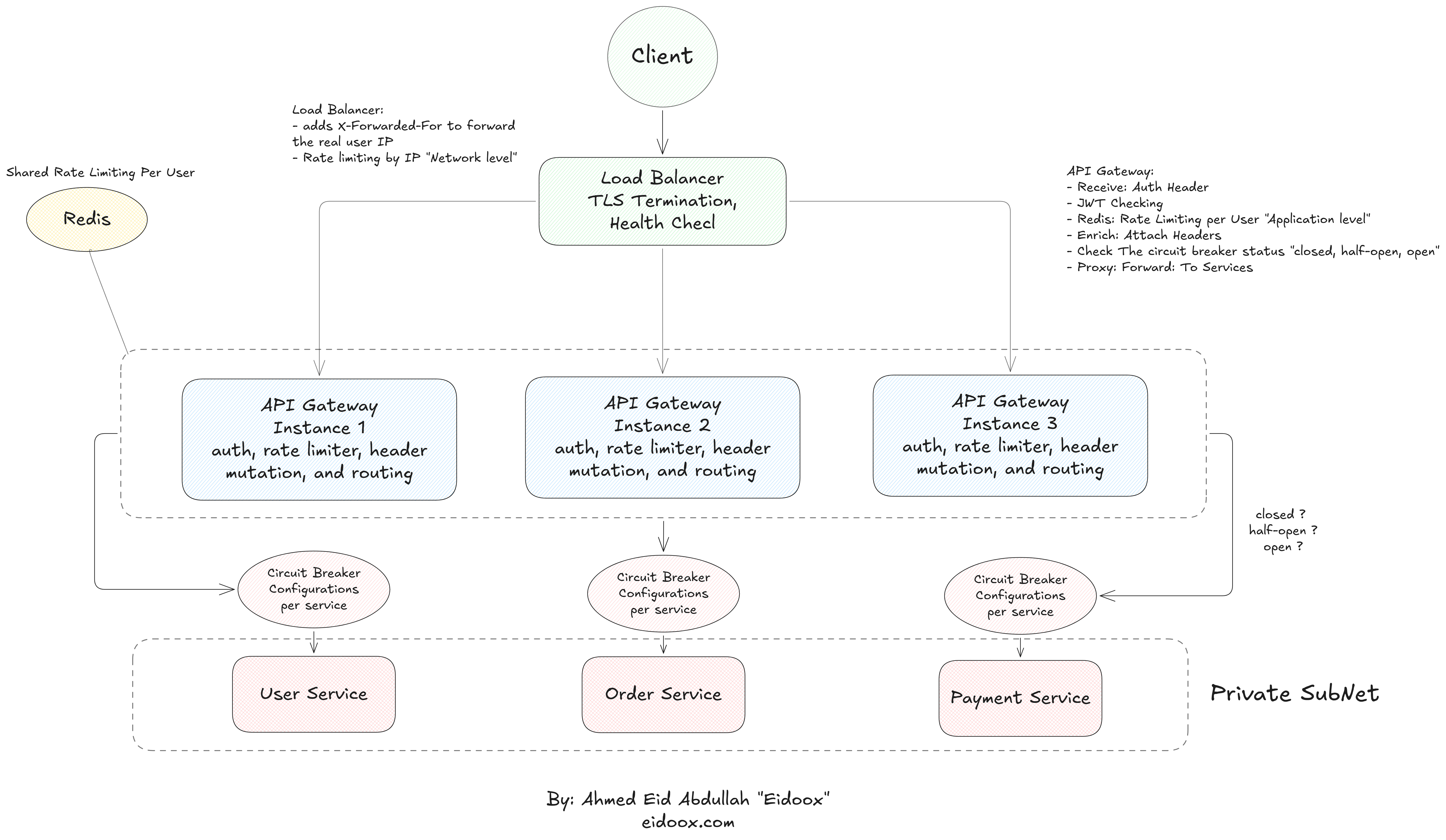
You can find the complete implementation of the production-grade API Gateway in the GitHub repository, including Nginx load balancing, JWT authentication, proxy-layer request forwarding, per-service circuit breakers, circuit breaker management, and dependency failure handling strategies discussed throughout this article.
If you found this insightful, follow me and visit my website eidoox.com for more production lessons from real distributed systems. I’ll be sharing deeper architectural insights, failures we only learn after hitting production scale, and the engineering decisions that don’t usually make it into tutorials.
More production insights and distributed systems technical articles coming soon.
Comments
Join the discussionNo comments yet. Be the first to comment.
Distributed Systems Engineering
A collection of deep technical articles exploring how modern distributed and real-time systems are designed, built, scaled, and operated. This series covers event-driven architectures, messaging systems such as Kafka and RabbitMQ, asynchronous processing with BullMQ, WebSockets and real-time communication, caching, data consistency, scalability patterns, reliability engineering, and the architectural principles behind production-grade backend systems.


